
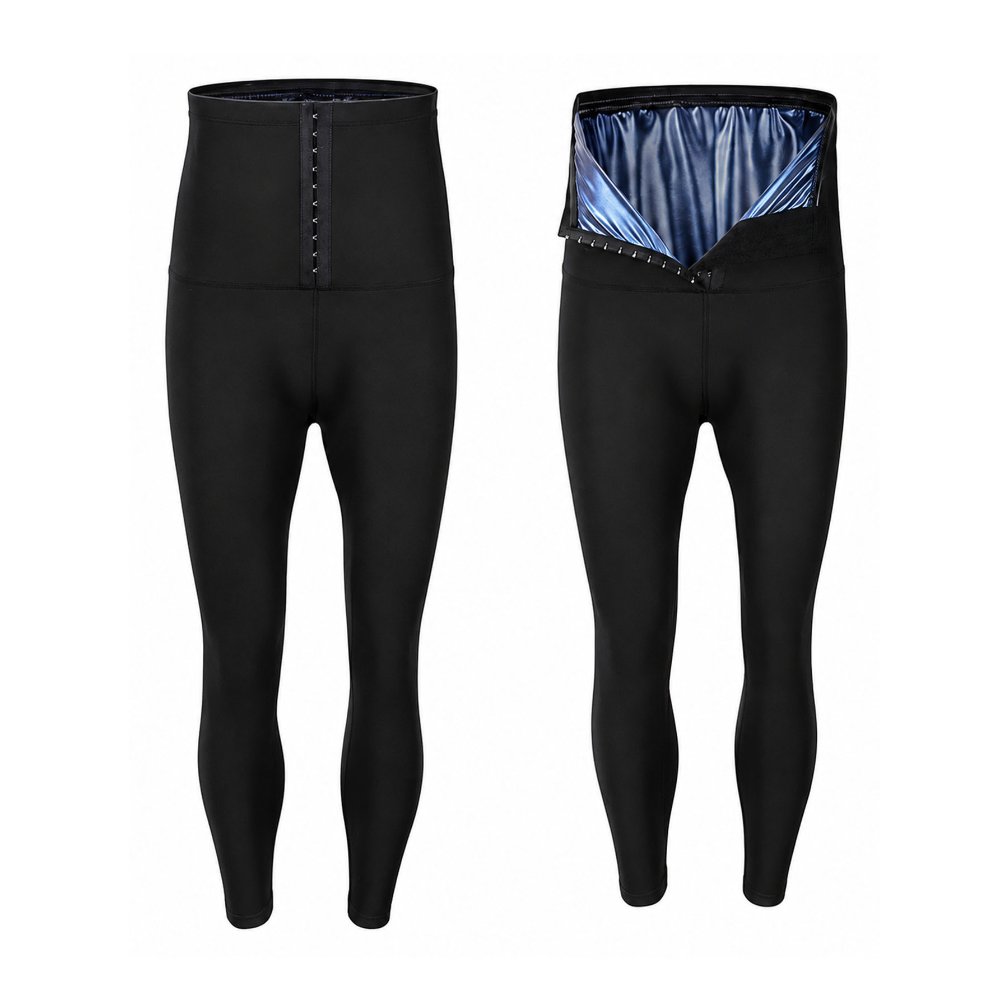
Sauna Pants: Separate Outer and Inner Materials
For wholesale sauna pants for men, record the outer and inner material statements separately. Ask the supplier to identify each physical component, its composition basis and the sample and quotation version it covers. A catalogue percentage describes the supplier’s statement; it does not establish a tested composition for the entire garment.
Start with the two statements the catalogue actually makes
A material line can look precise while still leaving a purchasing question unanswered: which part of the garment does it describe? On its sauna pants product page, Hchang lists “Outer: 95%Polyester 5%Spandex” and “Inner: 100%Polyurethane.” These are supplier-published component statements. Keep them as two separate entries rather than combining them into a new composition for the whole pair of pants.
The practical deliverable is a material record that follows the offered sample into the quotation. It should let a buyer, merchandiser and supplier locate the same component without relying on a photograph or a general product name. This article concerns that declaration record. Garment measurements, appearance approval and carton quantities require their own decisions.
Catalogue reference showing a blue-looking inner appearance. The photograph does not identify the component composition or the material of a quoted version.
Define what outer and inner refer to
Ask the supplier to mark the physical scope of each term on a product photograph or construction description. “Outer” might be understood differently by two people if one means the visible fabric and another means every component on the outside. “Inner” also needs an identified location. Do not replace the supplier’s wording with “lining,” “coating” or another construction term until the supplier confirms that description.
Use a component reference such as buyer record O-01 or I-01. These are document references created for the enquiry, not manufacturer model numbers. The record should quote the catalogue statement, then leave room for the supplier’s order-specific confirmation. If the offered sample uses a revised material, preserve the original statement and record the revision beside it; silently overwriting it removes the reason for the change.
Percentage arithmetic cannot resolve the missing scope. The two outer percentages total one hundred, and the inner statement also says one hundred percent. That does not explain how the finished garment’s components are weighted or whether trims, closures or other parts are included. Ask for the stated basis instead of calculating a whole-product claim.
Build a component declaration table
The following table is a request structure, not a completed specification. Its empty decisions should be answered for the exact version being offered. A concise record is easier to maintain than a paragraph that mixes composition, performance language and commercial terms.
Record field
Catalogue starting point
Order-specific answer to request
Outer component
95% polyester, 5% spandex, as published
Identify the physical part and composition basis covered.
Inner component
100% polyurethane, as published
Identify its location and the supplier’s construction description.
Offered version
Two pictured inner appearances
Connect the declaration to a named quotation line and sample reference.
Supporting document
No test conclusion established here
State what document is available, its date and the version it covers.
Revision
Catalogue wording retained
Record any proposed change and the buyer’s approval status.
Catalogue reference showing a silver-looking inner appearance. Visual differences do not establish a material difference or an interchangeable specification.
Keep visual references separate from composition evidence
The catalogue includes blue-looking and silver-looking inner appearances. These photographs help people identify which reference they are discussing. They do not prove that the surfaces have different compositions, or that both photographs represent the same offered construction. A colour appearance cannot establish fibre content, a layer structure or the reason a surface looks reflective.
Attach the relevant photograph to the material enquiry and ask the supplier to connect it to the declaration. If the supplier sends a sample, retain its identifier and receipt date with that answer. A sample photograph alone still cannot establish material composition; it provides a traceable object for the discussion. Any supporting document must identify what it examined or declared and which version it concerns.
Keep the exact supplier wording alongside the buyer’s component reference.
Distinguish a supplier declaration from an independent test report.
Record unanswered fields as pending rather than completing them from appearance.
Ask the supplier to flag substitutions before a revised quotation is accepted.
Use the record when comparing offers
Two quotations headed “sauna pants” may still be difficult to compare. Before comparing prices, check that each quotation identifies its component declaration and offered sample. If one offer provides only a general product description, ask for the missing component entries. This makes the comparison more useful without assuming either offer has a particular tested performance.
Keep promotional statements outside the composition cells. The product page uses performance-oriented wording, but repeating that wording does not validate a heat, health, slimming or durability result. If a purchasing requirement involves performance evidence, create a separate request describing the evidence needed. Material names alone should not be used to promise that outcome.
When an offer changes, compare the revised component record with the previous accepted version. A clear change note can identify the affected component, supplier explanation and sample status. Approval of the record should state what was accepted; it should not imply acceptance of unrelated sizing, packing or delivery terms.
Supplier-published chart retained as a separate catalogue reference. Its printed values are not approved specifications and do not substantiate a material declaration.
Material declaration questions
Can the outer and inner percentages be combined? Not into a whole-garment composition without an established basis. Preserve the two supplier statements separately and ask what each covers.
Does a silver-looking inside prove a different material? No. Use it as a visual reference and request the supplier’s material identification for that offered version.
Does the published chart verify the composition? No. The chart is a separate catalogue reference. Its values are not used here as approved measurements or material evidence.
What should accompany a repeat enquiry? Send the accepted component record, sample reference and quotation revision. Ask the supplier to confirm whether the new offer follows them and to identify any change.
Send a focused material enquiry
Prepare one page with the two catalogue statements, marked component references and the quotation line you want clarified. Use the contact page to request the supplier’s version-specific response. The product catalogue and blog provide further context, while the completed declaration record supplies the purchasing reference for this enquiry.
Sauna PantsMaterial DeclarationsB2B Purchasing